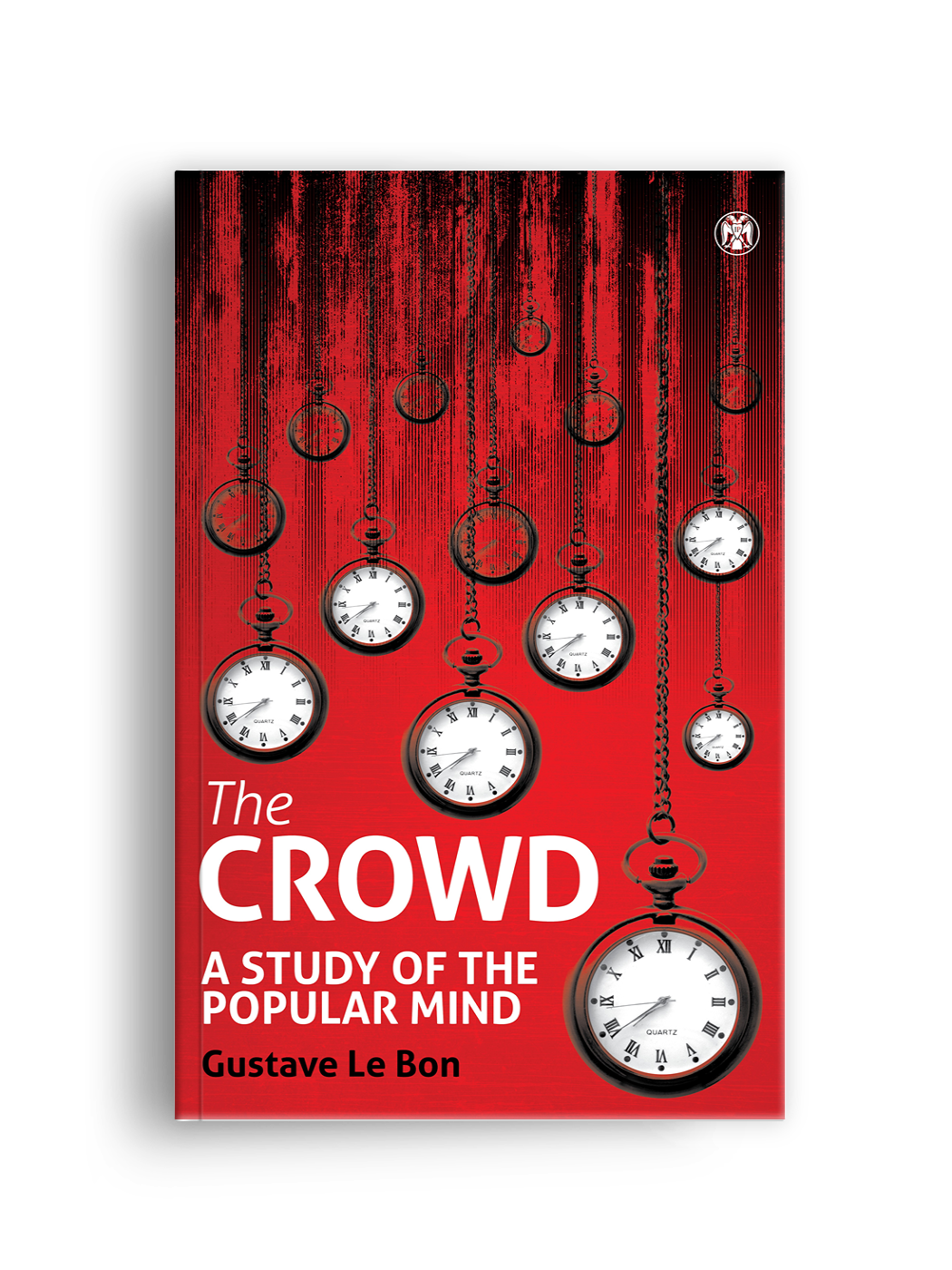


Why do intelligent, reasonable people act so differently in a crowd?
The answer given in Gustave Le Bon’s 1895 classic, The Crowd: A Study of the Popular Mind, is that when individuals merge into a collective, their rational minds recede. In this state of anonymity, personal accountability vanishes, and what rushes in to fill the void is impulsive emotion, heightened suggestibility, and a shared collective mind. Coming amid the wave of skepticism toward human rationality in the fin de siècle, Le Bon’s masterwork became a foundational text in social psychology, influencing figures as various as Freud, Bernays, and Hitler.
The Imperium Press edition includes scholarly apparatus and an extensive foreword by Paul Remer, which invites readers to consider the book’s extraordinary influence on psychology, sociology, political theory, propaganda studies, and the analysis of popular movements, while clarifying its relevance today.
Why do crowds become suggestible? How are beliefs transmitted to the masses? What gives leaders authority? And what happens to individual judgment under conditions of mass identity? Social psychology found its first convincing answers to these questions in Le Bon’s work, and it remains essential reading for anyone interested in the psychology of groups and the emergence of modern mass society.