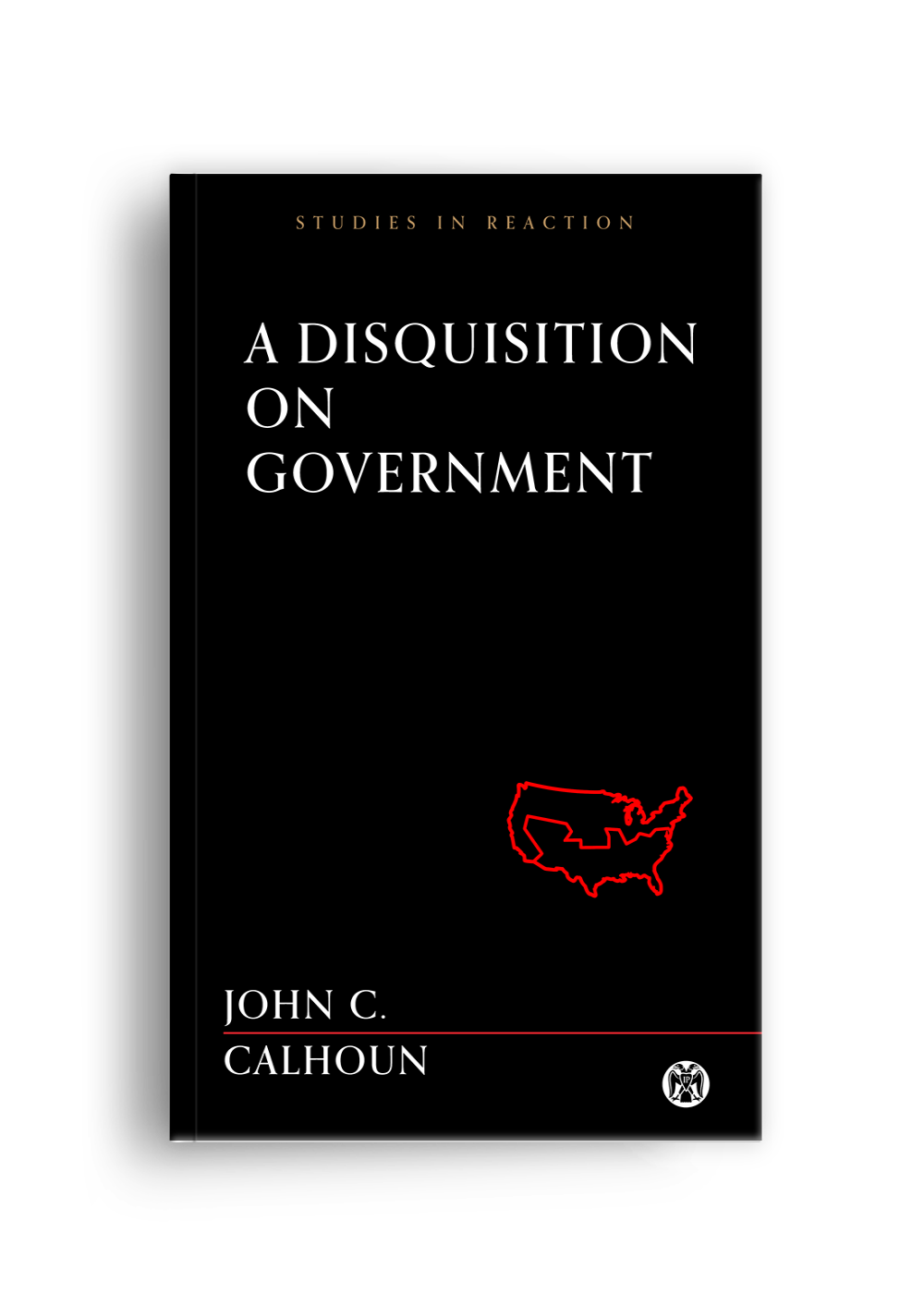

In A Disquisition on Government, John C. Calhoun presents a trenchant defence of political order rooted in hierarchy, tradition, and constraint. Writing in the turbulent decades before the American Civil War, Calhoun confronts the rising tide of mass democracy with a bold and systematic theory of the “concurrent majority”—a reactionary mechanism meant to shield entrenched interests and established communities from the levelling force of numerical majorities.
Far from championing popular rule, Calhoun calls for a form of constitutional government that privileges stability over change, consensus over mere counting, and liberty as inherited restraint rather than abstract right. This is not a work of liberal optimism but of sober resistance—a blueprint for halting the centrifugal tendencies of modernity. A Disquisition endures as a foundational text in American reactionary thought, offering a clear and unapologetic vision of a political order designed to preserve distinction, prevent domination, and maintain equilibrium in an age of upheaval.


